Driving in the UAE can be a smooth experience once you become familiar with the different parking zones, timings, and rules across its cities.
To make driving in the UAE easier, especially for first-time drivers, it helps to know how parking zones, timings, and rules apply in cities like Dubai, Abu Dhabi, Sharjah, and Ajman.
Knowing the different types of parking in these cities is an important first step, and it often raises common questions such as:
- Is parking free after 10 pm in Dubai?
- Where can I find free car parking near me?
- What are the parking rules when you use a rental car service?
In this blog, we walk you through everything you need to know—from where you can park and where you can’t, to how parking works with rental services like Udrive—so you can focus on enjoying the drive, not worrying about the rules.
Types of Parking
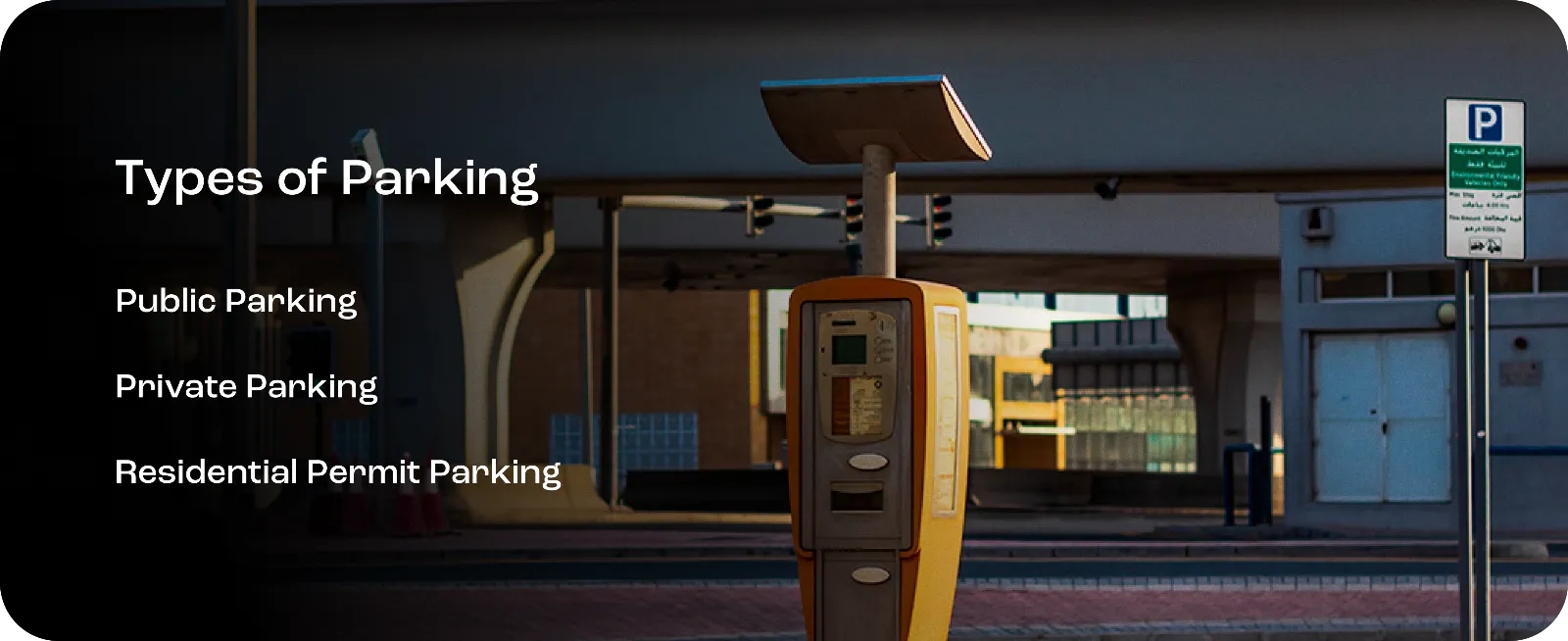
Understanding the different types of parking available is the foundation of stress-free driving in the UAE.
Public Parking
Public parking is the most common and widely used option across Dubai, Abu Dhabi, Sharjah, and Ajman. These are government-regulated spaces and are typically marked clearly with signage and road markings.
Public parking includes both on-street and off-street parking and is governed by local authorities like RTA (Dubai) and Mawaqif (Abu Dhabi).
This category forms the backbone of UAE parking systems and is what most drivers, including Udrive users, will rely on daily.
- On-Street Parking
On-street parking refers to parking spaces directly on public roads. These are clearly marked with painted lines and zone boards showing timings and fees.
You’ll see these extensively when driving through city centers, residential neighborhoods, and commercial districts, mostly while running short errands around shopping areas and office districts.
On-street parking rules differ by city, which is why understanding parking regulations in Dubai and Abu Dhabi is essential.
- Off-Street Parking
Off-street parking refers to areas that are not directly on the roadside, such as ground-level public lots and designated parking areas near beaches, parks, or other attractions.
If you rent a car from uDrive, you may park in public, uncovered, and government-regulated off-street parking, but private or gated lots are not allowed when ending a trip.
Some are free, while others are paid depending on the location and time.
Private Parking
Private parking refers to parking spaces that are owned and managed by private entities. These include mall parking, hotel parking, office buildings, airports, valet parking, and residential building basements.
These parking areas are never free unless explicitly stated and usually require you to take a ticket, scan your plate, or pay at a machine before exiting.
If you are using a rental or car-sharing service, it’s important to know that private parking is not covered. With Udrive, you may enter private parking for a short stop, but you cannot end your trip in these locations. Any parking fees or valet charges must be paid by you directly.
Residential Permit Parking
Residential permit parking is commonly found in apartment-heavy areas, especially in Abu Dhabi. These zones are often open to everyone during the day but become restricted to residents only during the evening and night.
This is where Abu Dhabi resident parking rules are especially important.
- Parking is allowed for everyone during the day, but becomes resident-only after the evening cut-off time, usually around 9 PM.
- Only vehicles with a valid residential parking permit are allowed to stay parked during restricted hours.
- Standard Mawaqif parking spaces may change their status at night, even if they were paid and legal earlier in the day.
- If you park in these zones without a valid permit during restricted hours, you may receive a fine even if the parking was allowed earlier in the day.
How Does Paid Parking Work in the UAE?
Paid parking in the UAE is managed at the city level, which means the rules, zones, timings, and fees vary depending on where you are driving. Below is a clear breakdown of how paid parking works in Dubai, Sharjah, Abu Dhabi and Ajman, and what drivers should know when using private cars versus rental or car-sharing services.
- Dubai
Dubai’s paid parking is managed by the Roads and Transport Authority (RTA) and is divided into regular and premium zones across the city.
- How does it work in Dubai?
- Parking areas are divided into clearly marked RTA zones with signage showing timings and fees.
- Most public parking follows fixed parking timings in Dubai, with free parking typically available late at night and on Sundays.
- Many drivers ask if parking is free after 10 pm in Dubai, and in most regular zones, the answer is yes, though premium zones may remain paid longer.
- Options like full-day parking in Dubai are available in certain areas, depending on the zone.
- For Different Cars
- Private car drivers must pay via SMS, parking meters, or apps.
- For rental cars: Parking fees must usually be paid by the driver unless stated otherwise by the rental company.
- And for Udrive cars, parking in supported public RTA zones is covered automatically, so you don’t need to pay separately when parking in those zones.
- Sharjah
Sharjah’s parking system is managed by the municipality and is generally simpler than Dubai’s, but still strictly enforced.
- How does it work in Sharjah?
- Paid parking applies in busy commercial and residential areas during designated hours.
- Parking is usually free at night and on public holidays, but timings can vary by location.
- Parking zones are marked with clear boards showing payment hours and rules.
- For Different Cars
- Private car drivers must pay during paid hours using meters or SMS.
- For rental cars: Parking fees must usually be paid by the driver unless stated otherwise by the rental company.
- Municipality parking within Udrive’s operational zones is allowed, and supported public parking is included.
- Abu Dhabi
Abu Dhabi’s paid parking system is managed by Mawaqif and is more structured compared to other emirates. Parking rules here depend heavily on zone type, time of day, and residential restrictions.
- How does it work in Abu Dhabi?
- Public parking is divided into standard and premium Mawaqif zones, each with different pricing.
- Abu Dhabi parking fees are higher in premium zones and busy commercial areas.
- Drivers must follow strict Abu Dhabi parking time rules, as paid hours often extend into the evening.
- Understanding parking timing in Abu Dhabi is critical because many standard zones convert into resident-only parking after 9 PM.
- Drivers often check the mawaqif free parking time to know when overnight parking is allowed without payment.
- For Different Cars
- Private car drivers must pay during paid hours using SMS, parking machines, or apps and must vacate resident-only zones at night without a permit.
- For rental cars: Parking fees must usually be paid by the driver unless stated otherwise by the rental company.
- For Udrive cars, parking in standard Mawaqif parking areas is allowed, but not in residential parking after 9 PM, and they are not premium zones. Parking in supported public areas is included; however, premium and residential-only zones are not permitted for ending a trip.
- Ajman
Ajman has a smaller and more straightforward parking system, mainly focused on high-traffic areas.
- How does it work in Ajman?
- Paid parking is enforced in central areas, markets, and busy streets.
- Outside peak areas, many zones offer free or low-cost parking.
- Timings and fees are displayed on municipality signs
- For different cars
- Private car drivers pay using local parking systems during paid hours.
- For rental cars: Parking fees must usually be paid by the driver unless stated otherwise by the rental company.
- For Udrive cars, municipality parking within Ajman’s operational zones is permitted, as long as the parking is public, uncovered, and legal.
Parking Fees and Timing
Parking fees and timings across the UAE depend mainly on three factors: city, zone type, and time of day. While signage usually makes this clear, understanding the general pattern helps you plan better and avoid unnecessary fines.
In busy commercial areas, parking fees are usually higher and paid hours are longer. In residential or less crowded areas, parking may be cheaper or even free during certain times.
For drivers moving between emirates, being aware of different fee structures under UAE parking systems is essential, as assumptions from one city may not apply in another.
Peak & Off-Peak Parking Hours
Peak parking hours typically fall during:
- Morning business hours
- Late afternoon and early evening
- Weekdays in commercial and office districts
Off-peak hours usually include:
- Late-night hours
- Early mornings
- Sundays and public holidays
This is when many drivers search for free car parking near me, especially in city centers or near residential areas. However, always confirm the zone rules, as premium or residential zones may still have restrictions.
Parking Zones
Parking zones are marked with boards that display:
- Zone code
- Paid hours
- Parking fees
- Any special conditions
In Dubai, zones are labeled with letters and colors, while Abu Dhabi uses Mawaqif zone types. Knowing how to read these boards is key to following parking rules in Dubai and avoiding penalties in other emirates as well.
Never assume the same rules apply across streets, even within the same neighborhood.
Payment Options
Payment methods depend on the city and vehicle type.
For private and rental cars, common payment options include:
- SMS parking
- Parking meters
- Mobile parking apps
- Recharge cards
For Udrive cars, parking in supported public zones is handled automatically, meaning you don’t need to make separate payments when parking in covered areas. This helps simplify short trips and city driving.
Parking in private areas, such as malls, valet zones, or airports, must always be paid for by the driver, regardless of the vehicle type.
Free Parking Rules
Free parking is available across the UAE, but only during specific times and in certain zones.
Common free parking situations include:
- Late-night hours in regular public zones
- Sundays and public holidays
- Designated free parking areas
During Ramadan, parking schedules may change. Many drivers specifically check Ramadan free parking timings in Dubai to understand which hours are free and which are still paid during the holy month.
In Abu Dhabi, checking mawaqif free parking time is especially important if you plan to leave your car parked overnight.
Common Parking Mistakes to Avoid
Many parking violations happen because drivers assume rather than confirm.
Some common mistakes include:
- Parking in residential permit zones without authorization
- Assuming mall or hotel parking is free
- Ignoring night-time zone changes
- Ending rental trips in private or basement parking
- Parking in premium zones without realizing that higher fees apply
Tourists and visitors should also be careful when visiting popular landmarks. For example, parking at the Sheikh Zayed Mosque is free, but it is only allowed in designated areas, and improper parking can still result in penalties.
Parking Violation Fines
Parking fines vary by emirate and violation type, but enforcement is strict across the UAE.
Common reasons for fines include:
- Parking in restricted or resident-only zones
- Exceeding paid parking time
- Blocking entrances, sidewalks, or driveways
- Parking in unauthorized or private areas
If you’re using a rental or car-sharing service, fines are usually passed on to the driver, along with possible service fees. Staying informed is the best way to avoid unnecessary charges.
How We Support You
At Udrive, we aim to make driving and parking in the UAE as simple and stress-free as possible, especially for first-time drivers.
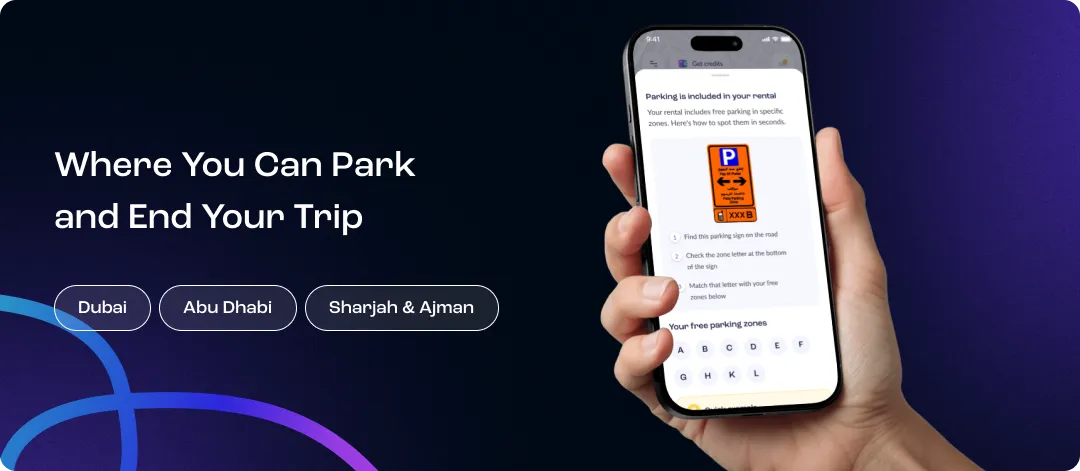
Where You Can Park and End Your Trip
- Dubai:
You can end your trip in regular RTA parking zones A, B, C, D, F, G, H, K, M, N, and W, and premium zones AP, BP, CP, DP, GP, MP, and WP, as well as unlimited free public parking areas. Zones I and J are not covered.
- Abu Dhabi:
You can park in standard Mawaqif parking areas that do not convert into residential parking after 9 PM and are not premium zones.
- Sharjah & Ajman:
Municipality parking within Udrive’s operational zones is allowed, as long as the parking is public, uncovered, and legal.
Where You Cannot End a Trip
You cannot end your trip in:
- Malls
- Airports
- Valet parking
- Basement or underground parking
- Private or gated communities
You may stop temporarily in these locations, but parking fees must be paid by you, and the trip must end in an approved public zone.
Know the rules
Parking in the UAE may seem complex at first, but once you understand zones, timings, and city-specific rules, it becomes much easier to manage.
Whether you’re learning about types of parking in the UAE, understanding Abu Dhabi parking fees, checking Abu Dhabi parking times, or figuring out parking timing in Abu Dhabi, having clear and reliable information helps you drive with confidence and without worrying about any of these objections.
This guide is designed to be your go-to reference whenever you’re unsure about where or how to park so that you can focus less on rules and more on enjoying the drive.